Florida Commercial Insurance: What Business Owners Should Know
Florida commercial insurance helps businesses manage financial risks associated with property damage, liability claims, vehicles, employees, and other business operations. Because every company has different exposures, commercial insurance typically consists of multiple types of coverage selected according to the business’s industry, size, property, employees, and activities.
For Florida business owners, understanding the basics of commercial insurance is an important first step toward identifying potential risks and coverage gaps.
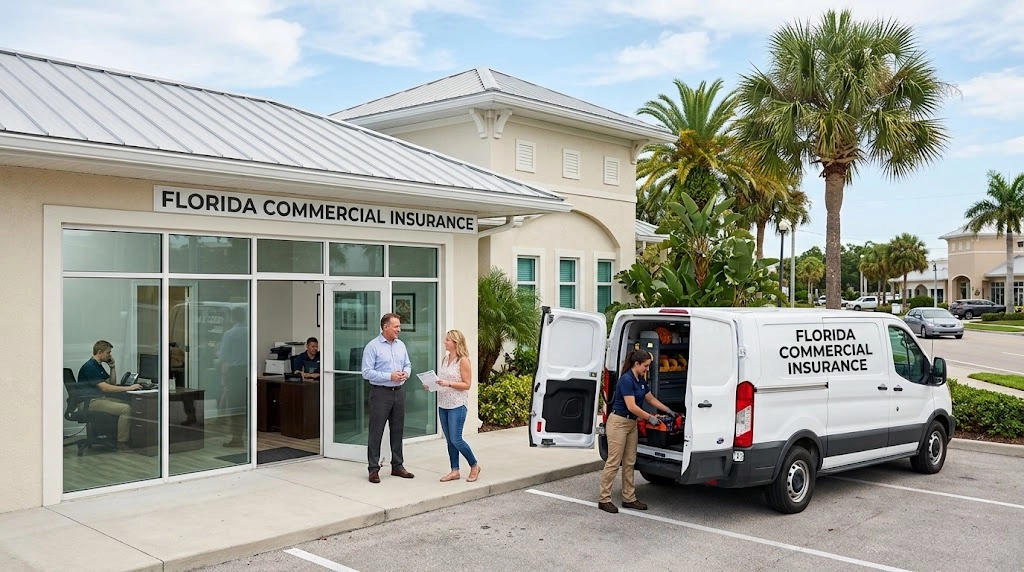
What Is Commercial Insurance?
Commercial insurance, also called business insurance, is a broad category of insurance designed for businesses rather than individuals.
A business may face financial losses from events such as property damage, accidents involving customers, vehicle crashes, employee injuries, or other covered incidents. Commercial insurance can transfer certain risks to an insurance company according to the terms of the policy.
There is no single commercial insurance policy that is appropriate for every Florida company. A small retail store, construction contractor, professional office, restaurant, and automotive business can all have very different exposures.
For this reason, businesses often use a combination of policies or coverages.
Common Types of Commercial Insurance in Florida
Understanding the major types of business insurance can make it easier to determine which coverages may be relevant to your company.
General Liability Insurance
Commercial general liability insurance can help protect a business from certain claims involving bodily injury, property damage, and other covered liabilities.
For example, if a customer is injured on business premises and alleges that the company is responsible, general liability coverage may respond to an eligible claim, subject to the policy’s terms and limits.
Businesses that interact with customers, vendors, or the public should consider their liability exposure carefully.
Commercial Property Insurance
Businesses often depend on buildings, inventory, equipment, furniture, and other physical property to operate.
Commercial property insurance is designed to protect eligible business property against certain covered causes of loss.
Florida businesses should pay particular attention to policy terms involving wind, storms, water damage, deductibles, exclusions, and other property risks. Not every type of weather-related damage is automatically covered by a standard commercial property policy.
Commercial Auto Insurance
Personal auto insurance generally is not designed to address all risks associated with business vehicle use.
Commercial auto insurance can provide coverage for vehicles used in business operations. Depending on the policy, coverage may include liability, physical damage, and other protections.
Businesses should consider who drives company vehicles, how those vehicles are used, where they travel, and whether employees use personal or rented vehicles for business purposes.
Workers’ Compensation Insurance
Workers’ compensation insurance is designed to provide eligible benefits when employees experience qualifying work-related injuries or illnesses.
Florida has workers’ compensation requirements that vary based on factors such as industry and number of employees. Construction businesses, in particular, can face different requirements from many non-construction businesses.
Because legal requirements can change and exceptions may apply, employers should verify their current obligations with the appropriate Florida authorities or a qualified professional.
Other Types of Business Insurance
Depending on its operations, a Florida business may also consider coverage such as:
- Professional liability insurance
- Cyber liability insurance
- Business interruption coverage
- Inland marine insurance
- Equipment breakdown coverage
- Employment practices liability insurance
- Umbrella or excess liability coverage
- Specialized industry-specific insurance
The appropriate combination depends on the risks associated with the individual business.
What Risks Should Florida Businesses Consider?
Location can have a major influence on commercial insurance needs.
Florida businesses may need to consider exposure to hurricanes, windstorms, flooding, heavy rain, and other severe weather events in addition to ordinary business risks.
However, business owners should not assume that every weather-related loss is covered by a standard property policy.
Flooding is an important example. Flood coverage may need to be obtained separately depending on the business and insurance arrangement. Windstorm and hurricane-related provisions, exclusions, and deductibles should also be carefully reviewed.
Risk is not limited to weather.
A restaurant may be concerned about customer injuries and equipment failure. A contractor may have risks involving employees, job sites, vehicles, and expensive tools. A professional firm may be more concerned about allegations involving its services or cyber incidents.
The first question should therefore be: What could create a significant financial loss for this particular business?
How Do You Choose Commercial Insurance in Florida?
Start by identifying your company’s major assets and exposures.
Consider your property, employees, vehicles, customers, equipment, contracts, technology, locations, and services. Then determine which risks could create significant financial consequences.
When comparing commercial insurance, look beyond the premium. Review:
- Coverage limits
- Deductibles
- Exclusions
- Policy conditions
- Optional endorsements
- Carrier requirements
- Claims considerations
- Business-specific exposures
Businesses should also review insurance requirements contained in leases, financing agreements, customer contracts, and licensing arrangements.
Working with an independent insurance agency can help a business compare available coverage from multiple insurance carriers rather than relying on a single option.
Frequently Asked Questions About Florida Commercial Insurance
What is commercial insurance in Florida?
Commercial insurance is a category of insurance designed to protect businesses against certain financial risks. Coverage can include general liability, commercial property, commercial auto, workers’ compensation, professional liability, and other business insurance products.
Does every Florida business need commercial insurance?
Insurance requirements depend on factors such as the type of business, employees, vehicles, contracts, licenses, and industry. Even when a particular policy is not legally required, businesses may choose coverage to manage financial risks.
Does Florida commercial insurance cover hurricanes?
Coverage depends on the specific policy. Florida businesses should carefully review property coverage, exclusions, wind or hurricane provisions, and applicable deductibles rather than assuming all hurricane-related losses are covered.
Does commercial property insurance cover flooding?
Businesses should not assume standard commercial property insurance covers flood losses. Separate flood coverage may be needed depending on the policy and risk.
How much commercial insurance does a Florida business need?
There is no universal coverage amount. Appropriate limits depend on the business’s assets, operations, contracts, employees, vehicles, liability exposure, and potential financial losses.
How often should a business review its insurance?
Businesses should consider reviewing coverage periodically and whenever significant changes occur, such as hiring employees, buying vehicles, moving locations, purchasing equipment, signing major contracts, or expanding services.
Understanding Your Florida Commercial Insurance Needs
Florida commercial insurance is not simply about purchasing a standard policy. It is about identifying the risks that could affect your business and determining which insurance solutions may help manage those exposures.
From general liability and commercial property to commercial auto and workers’ compensation, different policies address different risks. Florida businesses should also carefully consider weather, property, contractual, and industry-specific exposures.
If you want to explore coverage after learning the basics, Single Source Insurance can help Florida businesses evaluate commercial insurance options based on their individual operations and needs.

